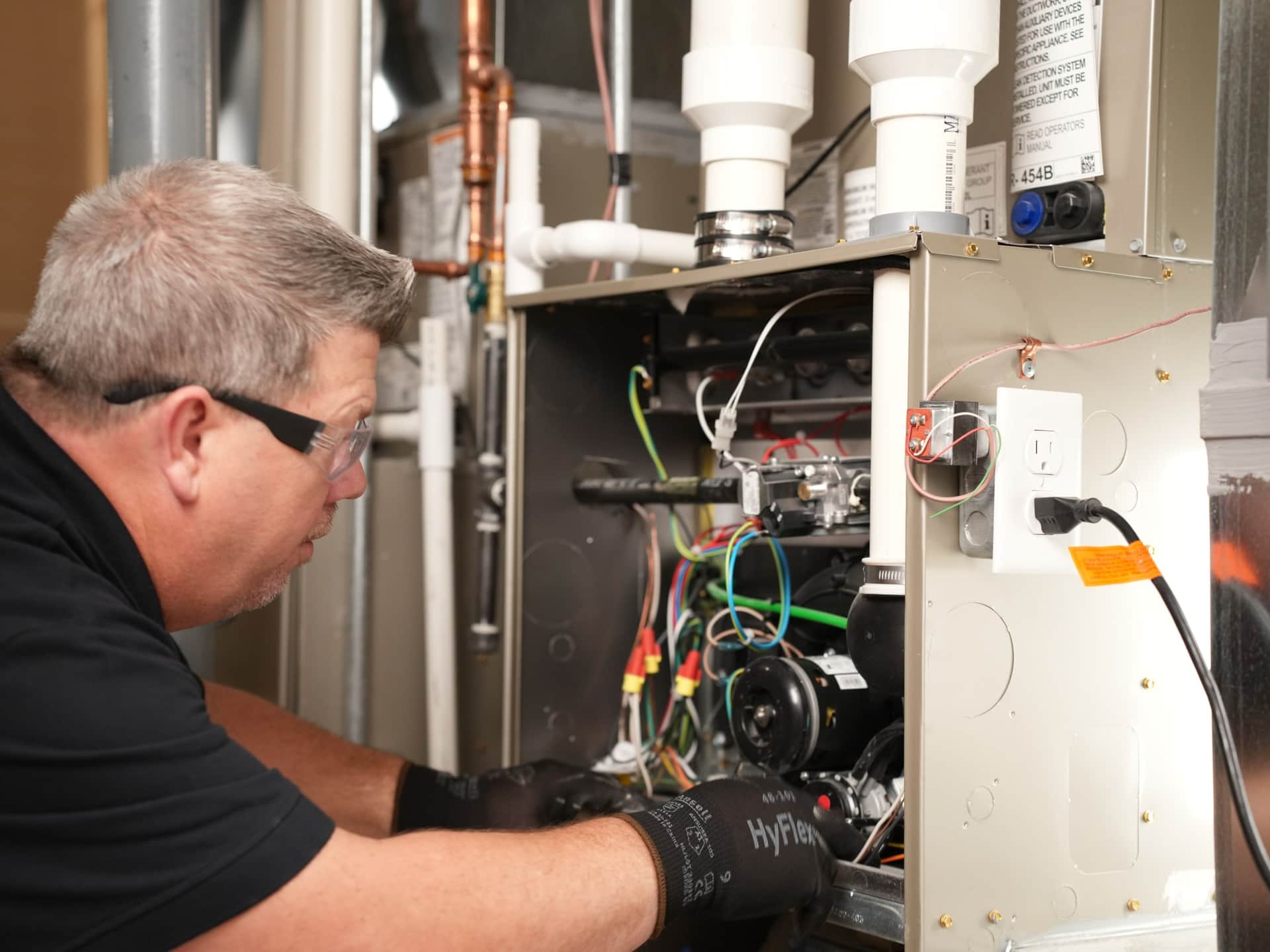
Emergency heating service — Southwest Ohio
Emergency Furnace Repair
A furnace failure on a cold Southwest Ohio night gets serious quickly. We find out why it stopped — ignition, controls, airflow or combustion — check that it is safe to run, and give you the price before any work begins.
- Covers
- Gas and electric furnaces, controls and ductwork
- Service area
- Hamilton, OH and 10 nearby communities
- Pricing
- Diagnosed first, priced and approved before any repair
Start here
What Is Your Furnace Doing?
Pick the closest description. Each one explains what it usually points at and what a technician checks first — and flags the few that mean you should stop running the system now.
Nothing happens when the thermostat calls for heat
On a modern furnace this is commonly power, controls or a safety lockout rather than the burner itself. These systems are designed to refuse to fire when a safety check fails — an unresponsive furnace is often the equipment working exactly as intended, not ignoring you.
What we check first
- Breaker and the furnace service switch, which looks like a light switch nearby
- Thermostat power, settings and wiring
- The blower door safety switch — the furnace will not run with the panel loose
- Control board diagnostic codes, which usually name the fault directly
The fan runs but the air is cold
Usually the burner is either failing to light or lighting and then dropping out, leaving the blower to circulate unheated air. A dirty flame sensor is one of the most common causes of exactly this pattern.
What we check first
- The full ignition sequence — igniter, gas valve, burner
- Whether the burner lights and then shuts down after a few seconds
- Flame sensor condition
- That the thermostat is set to HEAT and the fan is on AUTO rather than ON
It runs briefly, shuts off, then starts again
Short cycling means something is telling the furnace to stop early. Most often that is overheating caused by restricted airflow, with a safety limit switch cutting the burner to protect the equipment. Left alone it stresses components and drives up running costs.
What we check first
- Filter condition and airflow restriction — the usual culprit
- Limit switch operation and heat exchanger temperature
- Flame sensing and ignition stability
- Thermostat placement, in case it is reading a false temperature
Banging, scraping, screeching or rumbling
The kind of noise and when it happens both matter. A bang at ignition suggests gas building before it lights. A metal-on-metal scrape usually means a blower problem. A persistent rumble after the burner shuts off can indicate a burner or heat exchanger issue.
Right now: If you hear a bang or boom when it lights, or metal scraping on metal, turn the furnace off at the thermostat and call. Both can get worse quickly.
What we check first
- Whether the noise occurs at ignition, during the blower run, or at shutdown
- Blower motor, wheel and bearings
- Inducer motor and venting
- Burner condition and the heat exchanger
Something smells like it is burning
A brief dusty smell the first time you run heat for the season is normal — that is dust burning off the heat exchanger, and it should clear within an hour or so. A smell that persists, or one that is acrid, electrical or like hot plastic, is not normal and warrants shutting the system down.
Right now: Turn the system off. If what you smell is gas — often described as rotten eggs — or the smell is strong, leave the home first and call 911 from outside. Do not use light switches on your way out.
What we check first
- Whether the smell is seasonal dust burn-off or something else
- Blower motor and wiring for overheating
- Burner operation and combustion
- Filter condition, since a badly clogged filter can overheat the system
It runs constantly but never reaches the setting
A furnace that runs without satisfying the thermostat is either not producing the heat it should or not delivering it. In genuinely extreme cold some of that is expected, but a system that has kept up in previous winters and no longer does has usually developed a fault.
What we check first
- Filter and duct restrictions limiting delivery
- Burner operation and gas supply
- Heat exchanger condition
- Thermostat calibration and whether it is reading the room accurately
Not listed here? A furnace that trips its breaker repeatedly, or one that has visible scorching or rust around the burners, is worth treating as urgent. Turn it off and call.
Scope of service
What an Emergency Furnace Call Covers
A furnace can fail for reasons that are inconvenient and reasons that are dangerous, and from the thermostat they look the same. Every emergency call checks both.
- 01
Full heating system diagnosis
The furnace is tested through a complete heating cycle rather than assessed from a single symptom — ignition, combustion, airflow and shutdown all get looked at.
- 02
Combustion and venting
Burner operation, flame sensing, draft and venting. These are the checks that separate a furnace that is merely broken from one that is not safe to keep running.
- 03
Heat exchanger inspection
A cracked heat exchanger is the fault that turns a heating problem into a carbon monoxide problem, so it is checked rather than assumed intact.
- 04
Ignition and controls
Igniter, gas valve, flame sensor, limit switches and the control board — including any diagnostic codes the furnace has already logged for itself.
- 05
A plain explanation
What failed, why it failed, and what your options are — in language that lets you make the decision rather than defer it.
- 06
Approval before any repair
The recommended work and its pricing, given to you before anything is touched. Nothing proceeds until you approve it.
What happens
From Your Call to Warm Air
Five steps, and you are told where you stand at each one.
Right away
You call
Call (513) 555-0142 and tell us what the furnace is doing. We check first for anything that makes the home unsafe to stay in, then confirm your address is in our service area.
On that call
We give you the timing
Arrival depends on your location, current demand, weather and technician availability. In a cold snap heating calls come in together, and we would rather tell you that honestly than leave you watching the window.
On arrival
Diagnosis on site
Your technician runs the furnace through a full heating cycle and checks combustion, venting and the heat exchanger alongside the fault you called about.
Before anything is repaired
You approve the work
You get the recommended repair and its pricing first. If we find something that makes the system unsafe to run, you will hear that plainly and separately from any repair quote.
Same visit, where parts allow
Repair and verify
Once authorized, we complete the work and watch the furnace through a full cycle — ignition to shutdown — before we leave.
Cost and approval
How Pricing Works
We don’t publish a flat price list for emergency furnace repair. A furnace that will not light might need a twenty-dollar flame sensor cleaned or a heat exchanger that ends the conversation, and a number posted online would be a guess dressed up as a quote.
We diagnose before we quote
The same symptom has several possible causes. A number offered before anyone has tested the system is a guess, and guesses have a way of growing once the work starts.
You hear it in plain terms
What failed, what it takes to put right, and what that costs — explained before anything is touched, not itemised on an invoice afterwards.
Nothing proceeds without your approval
No work begins until you have agreed to it. That includes any additional work discovered partway through a repair.
We say so when a repair isn’t worth it
If the sensible answer is replacement, or simply waiting, you will hear that too. Selling you a repair that will not last is not a service.
Where we work
Emergency Furnace Repair Across Southwest Ohio
Based in Hamilton, Ohio, covering the surrounding Butler and Warren County communities. Not sure whether your address is in range? Call and we’ll confirm.
- Hamilton
- Middletown
- Lebanon
- Mason
- West Chester
- Trenton
- Liberty Township
- Fairfield
- Franklin
- Springboro
- Deerfield Township
Before you call
Furnace and Heating Questions
My carbon monoxide alarm went off. What should I do?
Leave the property immediately and call 911 from outside. Do not stop to open windows, switch anything on or off, or investigate the furnace.
Do not go back inside until the emergency services have declared the home safe. Once they have, we can diagnose what caused it — but that is the second call, not the first.
There is a burning smell the first time I turn the heat on. Is that normal?
Usually yes. Dust settles on the heat exchanger over the summer and burns off the first time the furnace runs, which produces a brief dusty smell that should clear within an hour or so.
What is not normal is a smell that persists, or one that is acrid, electrical, or like hot plastic. Turn the system off and call. If you smell gas rather than burning, leave the home and call 911 first.
The furnace keeps starting and stopping. Can I leave it running?
It is better not to. Short cycling usually means a safety device is cutting the burner early, most often because restricted airflow is causing the furnace to overheat. Letting it continue puts repeated thermal stress on components including the heat exchanger.
Check whether the filter is severely clogged, and if the cycling continues, turn the system off and call.
Is it safe to keep using the furnace until someone can get here?
If it is running and nothing seems wrong beyond poor heating, you can. Turn it off if you notice a burning or electrical smell, loud banging or scraping, visible damage, or repeated breaker trips.
If a carbon monoxide alarm sounds or you smell gas at any point, leave the home and call 911 — that is not a wait-and-see situation.
Will I know the cost before the repair begins?
Yes. After diagnosing the problem, your technician will explain the recommended work and associated pricing before beginning an approved repair.
How quickly can someone arrive?
Arrival times depend on your location, current demand, weather conditions, technician availability, and the nature of the problem. Urgent calls are prioritized, and our team will communicate the expected timing when you contact us.
Request service
Tell Us What Your System Is Doing
Send us the details and we’ll follow up. For anything urgent, calling is faster.
In an emergency, call. It is the fastest way to reach us.
Call (513) 555-0142Rather not use the form?
Calling is the fastest way to reach us, and the only one worth using if your situation is urgent.
service@ohioemergencyhvac.com
Based in Hamilton, OH. Available 24/7 — urgent calls are prioritized.
Don’t Let an HVAC Failure Disrupt Your Home
Get help from a local HVAC team focused on responsive service, dependable workmanship, and clear communication. Call Emergency HVAC Ohio now to request emergency heating or cooling assistance in Southwest Ohio.
Serving Hamilton, Fairfield, Middletown, West Chester, Liberty Township, Mason, and nearby communities.